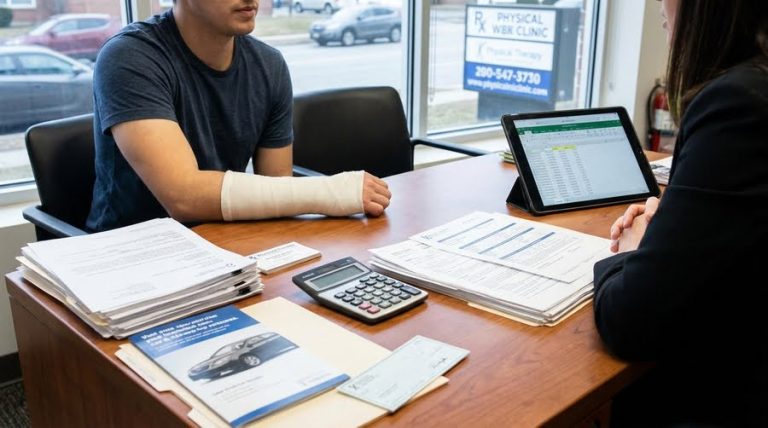
It Is Estimated That Over ___________% of All Crashes in the U.S. Are Caused by Driver Distraction

It is estimated that over 70% of all crashes in the U.S. are caused by driver distraction. This percentage reflects how visual, manual, cognitive, and auditory distractions — including texting, cell phone use, eating, adjusting vehicle controls, and interacting with passengers — divert a driver’s attention from the road and lead to rear-end crashes, head-on collisions, rollovers, T-bone wrecks, and multi-car pileups. This article covers the distracted driving crash percentage in the U.S., Florida-specific distracted driving facts and penalties under Sections 316.305 and 316.306, the 7 most common driver distractions, how to recognize a distracted driver on the road, and what steps to take after an accident with a distracted driver in Florida.
Question
It is estimated that over ___________% of all crashes in the U.S. are caused by driver distraction.
The answer is 70%. It is estimated that over 70% of all crashes in the U.S. are caused by driver distraction, based on studies that account for all forms of inattention including texting, phone use, eating, drinking, passenger interactions, and adjusting in-car technologies.
Solution
The estimated percentage of U.S. crashes caused by driver distraction is 70%. This figure comes from research that defines driver distraction broadly — encompassing any activity that diverts visual attention, manual control, or cognitive focus from the driving task. The National Highway Traffic Safety Administration (NHTSA) reports that distraction is present in at least 8% of fatal crashes using strict reporting criteria, but broader studies that include all forms of inattention (momentary glances, cognitive wandering, brief manual tasks) place the estimate above 70%.
Some educational sources cite 50% or 80%, depending on the definition of “distraction” used. The 70% figure represents the most commonly accepted answer in U.S. driver education curricula and Social Studies coursework, accounting for the full range of visual, manual, and cognitive diversions that contribute to crashes on American roads. Understanding where most car crashes occur in the USA provides additional context for how driver distraction interacts with high-risk locations.
Overview of Distracted Driving Crashes in the US
Distracted driving is any activity that takes a driver’s eyes, hands, or mind away from operating a vehicle. In the U.S., over 2.5 million people are involved in road accidents each year. Of these, 1.6 million involve a cell phone — representing 64% of all road accidents attributed to mobile device use alone.
The annual toll of distracted driving in the U.S. includes:
- 37,000+ deaths in automobile crashes
- 421,000 injuries in crashes involving a distracted driver
- 330,000+ accidents caused specifically by texting while driving
- 1 in 4 car accidents caused by texting and driving
Among teenage drivers, approximately 58-60% of crashes involve distraction as a contributing factor. This makes distracted driving the leading crash cause among younger drivers aged 15-20 — a population already at elevated risk on rural highways, during nighttime commutes, and in school zones.
Estimated Percentage of Crashes Caused by Driver Distraction
The estimated percentage of crashes caused by driver distraction varies by source and methodology:
| Source/Method | Estimated % | Scope |
|---|---|---|
| Broad distraction definition (all inattention) | 70%+ | All crash types |
| Cell phone involvement only | 64% | Crashes with mobile device |
| NHTSA strict fatal crash reporting | 8-9% | Fatal crashes only |
| NHTSA underreporting-adjusted estimate | 29% | All crashes (2019 study) |
| Teen driver distraction rate | 58-60% | Teen-involved crashes |
The 70% figure is the standard answer in U.S. driver education programs and remains the most widely cited estimate in academic materials, including Arguments in Context by Thaddeus Robinson and Introduction to Psychology by Jorden A. Cummings, which reference this statistic in discussions of human attention limitations.
Distracted Driving Statistics
There are 10 distracted driving statistics that define the scope of the problem in the U.S.:
- Texting while driving is 6 times more likely to cause an accident than drunk driving
- Reading a single text message distracts a driver for a minimum of 5 seconds
- At 55 mph (88.5 km/h), 5 seconds of distraction covers 360 feet (110 meters) — the length of a football field
- Texting increases crash risk by 23 times compared to undistracted driving
- 94% of teenagers understand the consequences of texting and driving, but 35% admit doing it anyway
- 11 teenagers die every day from texting while driving
- 25% of teens respond to at least one text while driving, every single time they drive
- Teen drivers have a 400% higher crash risk when texting compared to adult drivers
- Distracted driving with handheld devices increases time with eyes off the road by 400%
- A University of Utah study found that a teen using a cell phone has the same reaction time as a 70-year-old who is not using one
The high costs of car crashes in the United States cover medical expenses, vehicle damage, lost wages, legal fees, and long-term disability — all preventable costs when distraction is eliminated.
Florida Distracted Driving Facts
Florida ranks among the top states for distracted driving crashes, with specific characteristics that increase risk:
- Florida has over 15 million licensed drivers
- Tourist traffic creates unfamiliar-route navigation that increases GPS-related distraction
- Florida’s ban on texting while driving was strengthened in 2019 under the Wireless Communications While Driving Law
- Florida law enforcement issued over 4,800 citations in the first year of enhanced enforcement
- School zones and work zone areas carry increased penalties for distracted driving violations
- Florida’s flat, straight highway design creates a false sense of security that encourages multitasking behind the wheel
Ride-share drivers and food delivery drivers in Florida face particular distraction risks from constant app notifications, navigation changes, and passenger interactions during rush hour and holiday weekends. Drivers should understand what happens if someone else crashes their car in Florida, especially when lending vehicles to drivers who may engage in distracted behavior.
What Are the Most Common Types of Distracted Driving Accidents?
There are 5 common types of distracted driving accidents, each with distinct mechanisms and injury patterns.
Rear-end crashes
Rear-end crashes are the most frequent distracted driving accident type because distracted drivers fail to notice slowing or stopped traffic ahead. A driver reading a text at 55 mph covers a football field blind — enough distance for the vehicle ahead to stop completely. Rear-end crashes account for approximately 29% of all crashes and are overwhelmingly caused by driver inattention.
Head-on collisions
Head-on collisions occur when distracted drivers drift across the center line into oncoming traffic. These crashes carry the highest fatality rate of any crash type because closing speeds combine both vehicles’ momentum. Cognitive distractions during nighttime commutes on two-lane rural highways are a primary cause of head-on distraction crashes.
Rollover accidents
Rollover accidents happen when distracted drivers overcorrect after drifting onto a road shoulder or into a ditch. The sudden steering input at highway speed causes the vehicle to roll. SUVs and trucks with higher centers of gravity are most vulnerable. Drivers researching safe vehicles should review Ford Explorer years to avoid and Chevy Tahoe years to avoid for models with documented rollover concerns.
T-bone wrecks
T-bone wrecks (side-impact collisions) occur at intersections when distracted drivers run red lights or stop signs. A driver focused on a phone screen or adjusting vehicle controls fails to register intersection signals. T-bone crashes are particularly dangerous for occupants on the struck side of the vehicle, where structural protection is minimal.
Multi-car pileups
Multi-car pileups result from chain reactions when one distracted driver causes an initial collision that cascading into additional vehicles. These events are most common on highways during heavy rain conditions, in construction zones, and during holiday weekends when traffic density and distraction rates both increase.
Examples of Distractions
There are 7 primary distraction categories that cause U.S. crashes.
Texting while driving
Texting while driving combines visual, manual, and cognitive distraction simultaneously. A driver composing or reading a text removes eyes from the road for 5+ seconds, removes at least one hand from the steering wheel, and diverts mental processing from the driving environment. Texting is responsible for 330,000+ injury-causing accidents annually and makes a crash 23 times more likely. Over 78% of distracted driver crashes involve texting.
Cell phone use
Cell phone use beyond texting — including calls, browsing, social media, and app interactions — accounts for involvement in 1.6 million U.S. crashes annually. Handheld phone calls increase crash risk 2.8 times. Hands-free calls reduce manual distraction but still create cognitive distraction through inattentional blindness. Using voice commands reduces visual and manual load but does not eliminate cognitive diversion.
Passengers
Passengers create auditory and cognitive distractions through conversation, arguments, and activity. Child passengers cause distraction through crying, requests, and misbehavior. Among teen drivers, passengers with multiple teens present increases fatal crash risk by 21% compared to driving alone. Adult passengers can reduce distraction by handling navigation and phone notifications for the driver.
Personal grooming
Personal grooming — applying makeup, shaving, brushing hair, or checking appearance in mirrors — creates visual and manual distractions. Drivers performing grooming tasks during rush hour or in school zones create elevated risk because traffic conditions require rapid attention shifts.
Adjusting vehicle controls
Adjusting vehicle controls includes changing radio stations, setting climate controls, programming GPS destinations, and manipulating touchscreen infotainment systems. Modern vehicles contain 8-12 interactive touchscreen functions that require visual focus. Drivers unfamiliar with vehicle interfaces (rental cars, recently purchased vehicles) face increased risk. Understanding what happens if you crash a rental car or what happens if you crash a leased car is relevant because unfamiliar controls contribute to distraction-related rental and lease vehicle crashes.
Rubbernecking
Rubbernecking — looking at crashes, roadside incidents, construction activity, or unusual scenery — diverts visual attention from the road ahead. Rubbernecking causes secondary crashes at accident scenes and in work zone areas. On multi-lane roads and highways, rubbernecking-caused slowdowns create rear-end chain reactions.
Eating or drinking
Eating or drinking while driving creates manual distraction (one or both hands off the steering wheel), visual distraction (looking at food), and spill-reaction distraction (sudden movements when drinks tip). Drive-through culture encourages in-vehicle eating, particularly among food delivery drivers and commuters on unfamiliar routes.
Dangers of Distracted Driving
Distracted driving creates 4 categories of danger, each reducing a different component of safe vehicle operation.
Visual distractions
Visual distractions remove a driver’s eyes from the road environment. The human visual field processes road hazards, traffic signals, pedestrians, and vehicle movements. Removing visual input for even 2-3 seconds at highway speed (covering 150-180 feet / 46-55 meters) eliminates the driver’s ability to detect and respond to changing conditions. After daylight saving time changes and after midnight hours, reduced ambient lighting compounds the danger of visual distractions.
Manual distractions
Manual distractions remove a driver’s hands from the steering wheel. Steering corrections, emergency maneuvers, and precise vehicle control require both hands on the wheel. A driver holding a phone, food item, or grooming tool cannot execute the rapid steering inputs needed to avoid a collision. On gravel roads and in heavy rain conditions, manual control becomes even more critical because reduced tire grip requires constant small corrections.
Auditory distractions
Auditory distractions mask the sound cues that drivers rely on for situational awareness. Wearing headphones, playing music at high volume, and engaging in heated conversations block the sound of horns, sirens, screeching tires, and engine sounds that signal danger. Emergency responders approaching with sirens become inaudible to drivers with headphones or excessive cabin noise.
Cognitive distractions
Cognitive distractions divert mental processing away from the driving task. A driver experiencing emotional distress, engaged in complex conversation, or mentally composing messages cannot allocate sufficient cognitive capacity to hazard recognition and decision-making. Research shows cognitive distraction reduces visual information processing by up to 50% even when a driver’s eyes remain on the road (inattentional blindness). Hands-free calls eliminate manual and visual distraction but preserve full cognitive distraction load.
How Do You Recognize a Distracted Driver?
There are 7 observable signs that indicate a driver is distracted.
Drifting considerably from the center of their lane
Distracted drivers fail to maintain consistent lane position because visual and cognitive attention has shifted away from road tracking. The vehicle weaves within the lane, moving toward lane edges without correction.
Drifting into neighboring lanes of traffic
A more severe form of lane departure occurs when distracted drivers cross lane markings entirely. This behavior is common with passengers present during intense conversations, with handheld devices, and during drowsy driving episodes.
Visibly preoccupied with cell phones, food, maps, or other objects
Drivers holding phones to their ear, looking down at their lap (phone in lap), eating with one hand, or holding maps against the steering wheel are visibly distracted. These drivers present immediate danger to surrounding vehicles.
Braking or speeding suddenly or inconsistently
Distracted drivers brake late and hard when they finally notice slowed traffic, then accelerate quickly to close gaps. This inconsistent speed pattern is visible to following vehicles and creates rear-end crash risk during rush hour and in construction zones.
Lingering at stop signs or red lights
Distracted drivers fail to notice when traffic signals change to green, remaining stationary while other vehicles proceed. This behavior is common at traffic lights when drivers use stopped time to check phone notifications.
Wearing headphones
Drivers wearing visible headphones or earbuds are identifiable distracted drivers. Headphones create auditory isolation that prevents detection of horns, sirens, and environmental warning sounds. Many states prohibit headphone use while driving.
Leaving blinkers on without turning or merging
A turn signal left on indefinitely indicates the driver has forgotten activating it — a cognitive lapse consistent with distracted driving. This behavior signals reduced situational awareness and potential unpredictable maneuvers.
What Are the Consequences of Texting and Driving in Florida?
Florida law addresses texting and driving through 2 primary statutory sections that establish penalties and enforcement authority.
Section 316.305
Section 316.305 of Florida Statutes (the Florida Ban on Texting While Driving Law) establishes the following:
- Texting while driving is a primary offense in school zones and work zones, meaning law enforcement can stop a driver solely for texting
- Texting while driving outside school/work zones is a secondary offense (requires another violation to initiate a stop)
- First violation: Non-criminal traffic infraction with a fine plus court costs
- Second violation within 5 years: 6 points added to the driver’s license record plus fines
- Drivers under 18 face stricter restrictions under graduated licensing provisions
Section 316.306
Section 316.306 addresses wireless communication device use in school zones and work zones:
- Handheld device use (including calls) is prohibited in designated school crossings and active work zones
- Violations in school zones carry enhanced fines and mandatory points on the driver’s license
- Repeat violations within 5 years result in escalating penalties
- Penalties increase when distracted driving causes a crash resulting in injury or death
Drivers involved in distracted driving crashes in Florida face both criminal penalties and civil liability. Understanding the financial implications matters — whether addressing car lease agreement penalties or determining what happens if an unlicensed driver crashes your car.
What Should I Do if I Am in an Accident With a Distracted Driver?
Take 4 immediate actions after an accident with a distracted driver in Florida.
Talk to a Florida distracted driving accident lawyer
Contact a Florida distracted driving accident lawyer within 72 hours of the crash. An attorney can preserve cellphone records, dash camera footage, and witness statements that prove the other driver was distracted. Florida’s comparative negligence system allows partial recovery even if you share some fault, making legal representation critical for maximizing compensation. Drivers can face employment consequences for crashing a company car while distracted, and an attorney helps protect against unfair liability attribution.
Follow your doctor’s orders
Follow every medical recommendation completely, including attending all follow-up appointments, completing prescribed physical therapy, and taking medications as directed. Insurance companies use gaps in medical treatment to argue injuries are not serious. Complete medical documentation strengthens the connection between the distracted driver’s negligence and your injuries.
Keep a daily journal
Keep a daily journal documenting pain levels, mobility limitations, emotional impacts, sleep disruption, and missed activities. Write entries each day starting immediately after the accident. This journal becomes evidence of non-economic damages (pain and suffering) that support higher settlement values.
Maintain records of all receipts and bills
Maintain organized records of every expense related to the crash, including:
- Medical bills and co-payments
- Prescription medication costs
- Transportation to medical appointments
- Lost wages documentation from employer
- Vehicle repair or replacement costs
- Rental car expenses
- Home modification costs for disability-related needs
Get Help From a Distracted Driving Accident Lawyer in Florida – Paulette Auto list
Paulette Auto connects crash victims with experienced distracted driving accident lawyers across Central Florida. Consultation is free, and attorneys work on contingency — no fees unless you recover compensation.
Office in Tampa
Tampa serves Hillsborough County residents involved in distracted driving crashes on I-275, I-4, and the Selmon Expressway — corridors with high commuter traffic and frequent distraction-related rear-end collisions during rush hour.
Office in Lakeland
Lakeland serves Polk County residents affected by distracted driving on US-98, I-4 between Tampa and Orlando, and the rural highways surrounding Lakeland where reduced lighting after sunset hours increases crash severity.
Office in Auburndale
Auburndale provides coverage for distracted driving crashes along US-92, SR-559, and the agricultural corridors where food delivery drivers and commercial vehicles operate with handheld devices on unfamiliar routes.
Office in Winter Haven
Winter Haven serves the southern Polk County region, handling distracted driving cases from SR-17, US-27, and the residential areas near schools where enhanced penalties apply under Section 316.306.
Last Chance: Discuss with an Agent for Free! Act Now
Florida distracted driving accident victims have limited time to file claims. Florida’s statute of limitations for personal injury is 2 years from the accident date. Contact a distracted driving accident lawyer through Paulette Auto for a free consultation to discuss your case, understand your rights, and determine the value of your claim before time expires.
Drivers involved in crashes should understand their options whether they were driving their own vehicle, a leased car under $200 a month, or a vehicle belonging to someone else.
Community Answer on Distracted Driving %
The community answer confirms that it is estimated that over 70% of all crashes in the U.S. are caused by driver distraction. This answer has been verified across multiple educational platforms including Brainly (answered by Tundexi with 178.9 million people helped) and referenced in textbooks including Arguments in Context by Thaddeus Robinson, Psychology as a Biological Science (NOBA), and Introduction to Psychology by Jorden A. Cummings.
A second community answer (answered by avantikar on Brainly) cites over 50%, specifically noting that approximately 58% of crashes among teenagers involve distraction. The variance between 50%, 70%, and 80% answers depends on the study methodology:
- 70% — Most accepted answer in driver education materials, includes all forms of inattention
- 80% — Cited by some sources using the broadest definition of driver inattention including drowsiness
- 50% — Conservative estimate focusing only on active distractions (phone use, eating, grooming)
The 70% figure remains the standard fill-in-the-blank answer for this question in High School Social Studies curricula and driver education certification programs across the U.S. Regardless of which specific percentage applies, the data confirms that driver distraction causes the majority of U.S. crashes — making distracted driving the single largest preventable cause of traffic accidents, injuries, and fatalities on American roads.
Parents purchasing vehicles for teen drivers — the demographic most affected by distracted driving — should research safety ratings carefully. Reviewing Honda Civic years to avoid, Toyota Corolla best years, and Hyundai Accent years to avoid helps identify vehicles with strong crash protection for younger drivers who face the highest distraction-related crash rates.