What Happens If You’re Seriously Injured Working in a Mechanic’s Workshop?
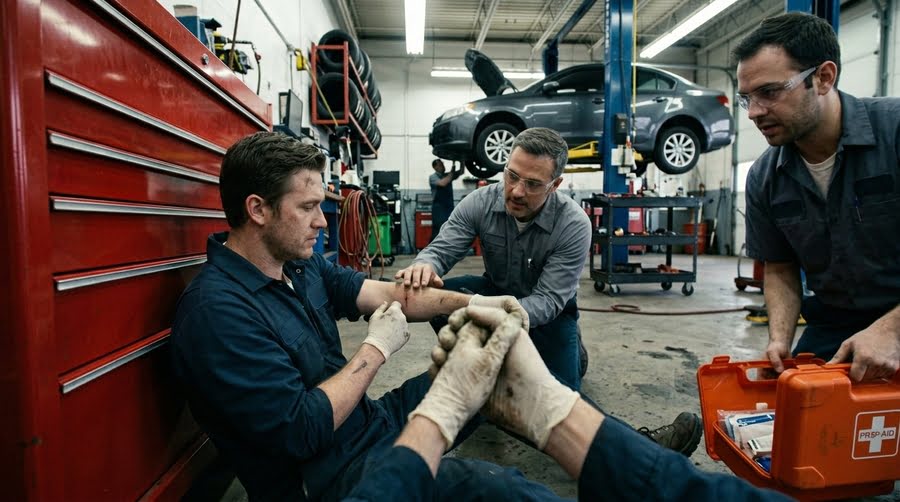
A workshop hides more risk than most people outside the trade would guess. Hoists fail, panels slip, brake cleaner splashes, a tyre cage lets go without warning. Spend enough years turning spanners and you will probably see a colleague carried out the roller door at least once. What happens to a mechanic who gets badly hurt on shift and can’t come back the next morning?
That question sits behind a lot of quiet worry in the trade, and the answers are less grim than most people assume.
Does workers’ compensation cover a workshop injury?
In most cases, yes. Anyone employed in a Queensland workshop should be covered by their employer’s WorkCover insurance from the day they start. Hurt your back lifting a gearbox, or cop a chemical burn off a degreaser, and you can lodge a claim for weekly payments and medical costs without proving anyone was at fault. The order is simple: get treated, ask the doctor for a Work Capacity Certificate, then lodge that with WorkCover alongside your claim form.
The statutory scheme is the floor, not the ceiling. It keeps wages trickling in and covers treatment, though it rarely reflects the full hit to your life when an injury is severe.
When the damage is more than a few weeks off
Some workshop accidents leave a lasting mark. A crushed hand under a dropped engine, or a spinal injury from a hoist that gave way, can change how you work for good. Where the harm is serious and your employer’s negligence played a part, an injured worker can pursue industrial accident compensation beyond the basic WorkCover payments, covering the things WorkCover leaves out, like long-term pain and the future earnings you stand to lose.
Negligence usually shows up in the gaps: a guard missing off the lathe, no training given on a new press, faulty gear nobody tagged out, a floor left slick with spilled oil. If a safe workplace would have spared you the injury and you weren’t given one, that opens the door to a larger claim.
Which workshop accidents tend to lead to claims?
The pattern across workshops is fairly consistent. Vehicles and machinery cause a big share of the serious ones. A car can roll off a hoist, or a hand can get dragged into a tyre machine before anyone hits the stop. Burns and electric shocks turn up regularly too, whether it’s a welding flash or a live wire in a hybrid system.
Then there is the slow damage nobody clocks until it’s done. Years on rattle guns chip away at your hearing. Solvents and paint fumes work on your lungs over time. The injury that ends a career isn’t always the dramatic one.
How long do you have to act?
Timing trips a lot of people up. A statutory workers’ compensation claim in Queensland generally needs to be lodged within six months of the injury. The bigger common law damages claim, the one tied to negligence, usually runs on a three year limit. Leave it too long and a strong case can quietly expire, so getting advice early makes sense even if you’re unsure whether your injury qualifies.
What might a serious claim be worth?
There’s no fixed figure, and anyone who quotes you one without seeing your file is guessing. Payouts move with how bad the injury is, whether you can work again, what treatment and home modifications you need, and the income you lose along the way. Serious industrial injuries in Queensland have settled anywhere from the low tens of thousands up into seven figures for life-altering cases. A lawyer who reviews your medical evidence and work history can give you a far more honest range.
Worried about what a lawyer costs?
Most personal injury firms run on a no win, no fee basis, so you don’t pay legal fees unless the claim succeeds. For a mechanic sitting at home with nothing coming in, that takes away the main reason people delay getting help. A free first consultation lets you work out where you stand before you commit to anything.
Where to start if you’ve been hurt
Look after the injury first, then keep every scrap of record: the incident report, the doctor’s notes, photos of whatever caused it, the names of anyone who saw it happen. Put your employer on notice in writing. After that, talk to someone who handles these claims for a living, because the gap between the WorkCover minimum and a full negligence payout can be huge, and it often hangs on what you do in the first few weeks.
A workshop injury can knock a whole year sideways. Understanding how the system works, and moving before the clock runs down, gives you the best shot at walking away with what you’re owed.