Honda CR-V Years To Avoid – Complete Guide

The Honda CR-V (Compact Runabout Vehicle) years to avoid are 1997–1999, 2002–2003, 2007–2009, and 2017–2019. These model years are cited most frequently for engine failures, electrical fires, airbag malfunctions, transmission breakdowns, and corrosion-induced suspension collapse.
Knowing which CR-V years to skip can save you thousands in repairs and keep you out of a genuinely dangerous vehicle. This guide breaks down every generation by recall count, complaint volume, and the specific problems most likely to follow you home.
Note: Recall and complaint counts are sourced from the National Highway Traffic Safety Administration (NHTSA) database, updated as of July 2025.
6 Honda CR-V Hybrid Issues By Year –
Six problems show up repeatedly across the most troubled CR-V model years:
Engine problems (oil dilution, overheating, and misfires): Many CR-V models, especially 2017–2019, suffer engine issues ranging from gasoline mixing into engine oil to overheating caused by failing radiator fans or heater core leaks. Some drivers reported stalling on highways or severe misfiring that damaged cylinder heads.
Electrical fires and dashboard failures: Models from 2002–2003 and 2007–2009 saw power window switch fires, smoking turn signals, and random dashboard blackouts.
Transmission slippage and failure: Owners of 1998–2003 CR-Vs reported transmissions slipping into neutral at highway speeds. CVT issues in later models led to jerky shifts, clunking sounds, and full transmission rebuilds — often not covered under warranty.
Air conditioning system breakdowns: Across multiple generations — most notably 2003 and 2008 — CR-Vs faced A/C compressor failures that contaminated the entire system, with repair bills regularly exceeding $2,500.
Dangerous airbag malfunctions: CR-Vs from 2002 through 2019 were caught up in the Takata airbag recall. Some airbags deployed without cause, others failed during crashes, and some exploded on impact, sending metal fragments into the cabin.
Frame rust and rear suspension collapse: In 2007–2009 models, particularly in salt-belt states, severe rear subframe corrosion led to axle detachment or rear wheel collapse while driving.
Sixth Generation Honda CRV Hybrid Issues (2023–Present)
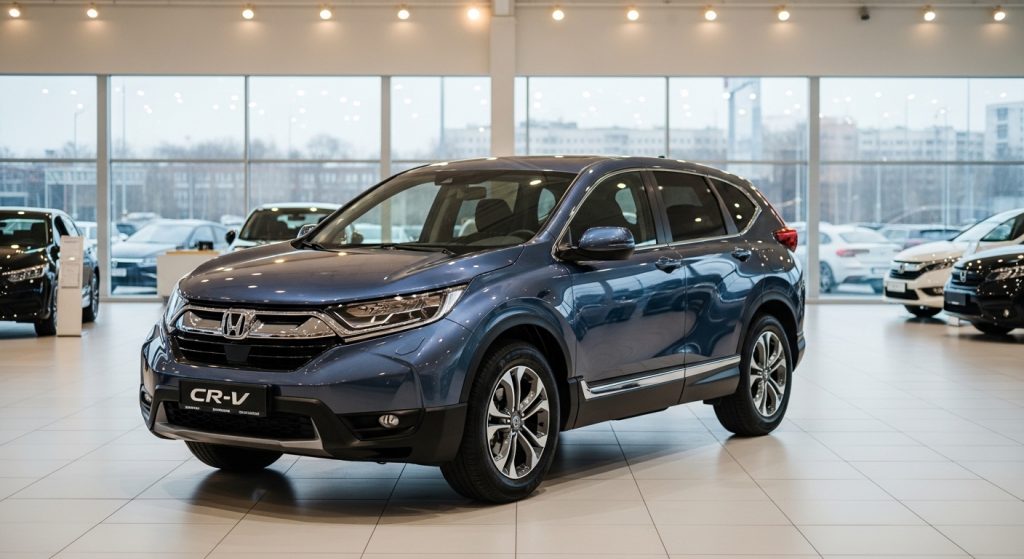
The sixth-generation CR-V launched for 2023 with a comprehensive redesign. Honda emphasized hybrid power on top trims, updated the interior with more rear legroom (41 inches) and cargo space (39.3 cubic feet behind the rear seats), and standardized the Honda Sensing safety suite across all models. The 2023 model earned a “Top Safety Pick+” rating from the Insurance Institute for Highway Safety (IIHS).
This generation is still new. Complaint data is limited, and no serious reliability patterns have emerged. If you’re buying used, expect to pay $25,000–$40,000 depending on trim and powertrain.
Fifth Generation (2017–2022)
Technical Service Bulletins
- 2017: 321
- 2018: 306
- 2019: 234
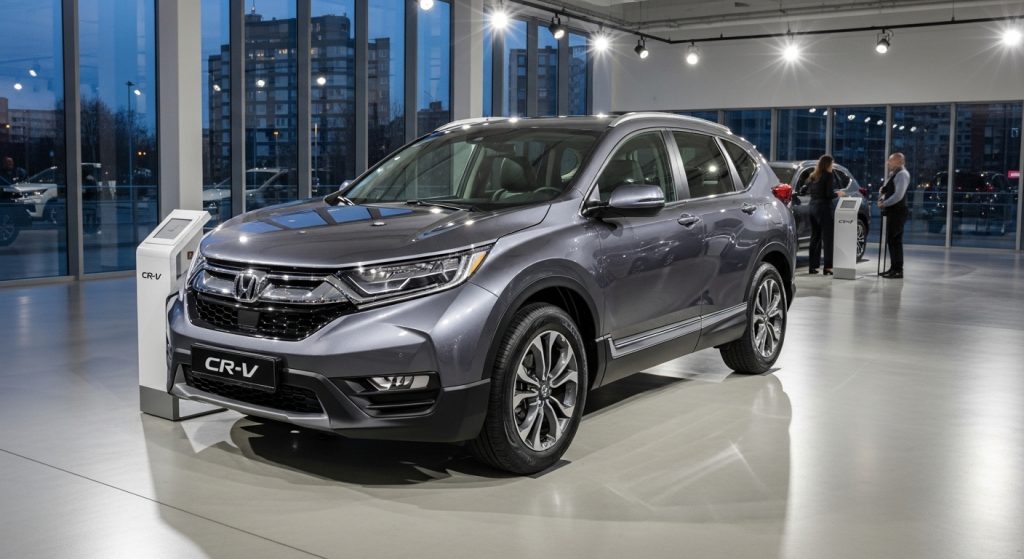
The fifth-generation CR-V debuted for 2017 with bold styling, more interior space, and a new 1.5L turbocharged four-cylinder engine on most trims. That engine became the center of a reliability crisis that defined the 2017–2019 model years.
A major refresh arrived in 2020, phasing out the old naturally aspirated 2.4-liter engine, standardizing Honda Sensing, and adding the first CR-V Hybrid. The 2020–2022 models are considerably more reliable than 2017–2019.
2017 Honda CR-V – 6 Recalls, 1,605 Complaints
The 2017 CR-V introduced the 1.5L turbocharged engine, and the problems started almost immediately. Owners report premature head gasket failures, turbocharger breakdowns, and catastrophic fuel injector issues. These failures often trigger limp mode while driving — a real hazard on highways.
Electrical gremlins are widespread: all dashboard warning lights randomly illuminate, ABS, traction control, and adaptive cruise control disengage without notice, and the vehicle may stall minutes after ignition. Drivers have also reported brake pedal failures and spontaneous automatic braking from the Collision Mitigation Braking System (CMBS).
Despite reports and lawsuits, Honda was slow to issue widespread solutions. This is one of the most problematic CR-V years ever produced.
2018 Honda CR-V – 4 Recalls, 1,855 Complaints
The 2018 model carries the highest complaint count of any CR-V year on record. It inherits every problem from 2017 without meaningful resolution: engine misfires, electronic system failures, stalling, turbo breakdowns, and dangerously unresponsive “sticky steering” at highway speeds.
The CMBS system remains erratic, activating braking randomly. Honda’s delayed recall response and inconsistent warranty coverage left thousands of owners paying out of pocket. Injector failure repairs frequently exceeded $2,000 and were not covered under factory warranty.
2019 Honda CR-V – 7 Recalls, 930 Complaints
The 2019 CR-V shows some improvement over 2018, but complaints remain high. Fuel injector failures cascade into safety feature deactivation — adaptive cruise control, lane keep assist, traction control, and ABS can all shut off with a single injector error.
Sudden power loss, limp mode activation, and stalling persist. Steering defects intensified this year, with defective EPS racks drawing repair quotes over $5,000. Some owners were denied help due to VIN exclusions despite confirmed safety defects.
Fourth Generation (2012–2016)

2012 Honda CR-V
Honda debuted the all-new fourth-generation CR-V for 2012. First-year gremlins appeared immediately: electrical issues and dead batteries top the complaint list, along with engine problems. Approach a 2012 with a pre-purchase inspection.
2013 Honda CR-V
The 2013 model holds a similar engine complaint volume to 2012, but other issues decline. This was the first year Honda sold more than 300,000 CR-Vs in a single model year. A 2013 CR-V that passes inspection is a reasonable choice.
2014 Honda CR-V
Engine complaints jumped 50 percent over 2013. This spike alone makes the 2014 a year to skip. Pass on this model unless you can document a clean mechanical history.
2015 Honda CR-V
Owner reports on the 2015 CR-V are filled with engine and transmission failures. This model was mid-cycle refreshed with a new CVT (continuously variable transmission), and early reliability issues with that unit are well-documented. Add the 2015 to your avoid list.
2016 Honda CR-V
Engine complaints drop sharply for 2016, and overall owner satisfaction improves. The CVT appears to have settled. The 2016 is one to consider if you want a fourth-generation CR-V.
Third Generation (2007–2011)

Technical Service Bulletins
- 2007: 135
- 2008: 129
- 2009: 117
- 2010: 123
- 2011: 109
The third-generation CR-V launched for 2007 with a more curvaceous exterior, a standard five-speed automatic transmission, and a 166-horsepower 2.4-liter four-cylinder engine. The 2007–2009 model years developed serious structural and safety problems that were not fully understood until years later.
2007 Honda CR-V – 12 Recalls, 877 Complaints
The 2007 CR-V has a combination of critical failures: airbag safety issues, fire-prone electrical components, malfunctioning door lock actuators, and rear subframe corrosion severe enough to cause suspension collapse.
A rear subframe corrosion recall (NHTSA Campaign No. 23V228000) found many 2007 CR-Vs “beyond repair.” Some experienced rear wheels collapsing inward or the entire axle detaching while driving. Honda refused full repair or repurchase for numerous affected owners. Door lock actuators also failed frequently, causing doors to re-lock immediately after unlocking — a daily safety concern for owners with children.
2008 Honda CR-V – 11 Recalls, 954 Complaints
The 2008 model inherits airbag and electrical problems from 2007 and adds steering and suspension failures. Numerous reports describe power steering fluid leaks, rack and pinion failure, and steering wheel lock-ups — sometimes mid-turn. One documented case involved a control arm snapping due to corrosion while the vehicle was in motion.
Rear trailing arm corrosion triggered safety recalls, but some vehicles failed inspection and were deemed non-repairable. Power window switch fires, A/C compressor blowouts, and VIN exclusions from applicable recalls compounded owner frustration.
2009 Honda CR-V – 12 Recalls, 383 Complaints
The 2009 model saw mechanical improvements, but airbags remained a major concern — 10 of the 12 recalls were tied to faulty deployment, non-deployment, or Takata inflator explosions. Some owners reported unexpected airbag deployment after minor curb impacts. Others discovered after actual collisions that their passenger airbags had never been repaired because recall scheduling addressed only the driver side initially.
2010 Honda CR-V
The 2010 CR-V received a visual refresh and an engine retune to 180 horsepower. Engine complaints tick up slightly, centered mostly on excessive oil consumption. Have any 2010 model checked for oil burning before buying.
2011 Honda CR-V
The 2011 is unusual — the final year of a generation is normally refined, but this model sees more engine trouble reports than 2010, along with brake complaints. Skip the 2011 CR-V.
Second Generation (2002–2006)

Technical Service Bulletins
- 2002: 267
- 2003: 221
- 2004: 142
- 2005: 112
- 2006: 67
The second-generation CR-V arrived for 2002 with more interior space, a new 160-horsepower 2.4-liter i-VTEC engine, and standard four-wheel antilock disc brakes. The generation received a mild refresh in 2005, adding a new five-speed automatic and the SE trim.
2002 Honda CR-V – 16 Recalls, 526 Complaints
The 2002 CR-V has 16 recalls — the most of any second-generation year — driven largely by Takata airbag defects. Honda issued 8 separate airbag recalls for this model year, yet parts were delayed or unavailable for months, leaving owners exposed to inflators capable of sending metal fragments into the cabin.
Electrical problems compounded the safety picture. Power window switches emitted smoke or caught fire, often originating in the driver-side door panel or steering column. Many affected vehicle identification numbers (VINs) were not covered by existing recalls, leaving owners with out-of-pocket repair costs.
Headlights burned out within months. Smoking turn signal switches caused sudden visibility loss. Faulty seat belt buckles and doors that wouldn’t lock or unlock rounded out a long list of electrical hazards. The 2002 CR-V is one of the clearest years to avoid in the entire CR-V lineup.
2003 Honda CR-V – 14 Recalls, 491 Complaints
The 2003 CR-V carries over airbag failures, window switch fires, and headlight defects from 2002, while adding new problems with the engine, A/C system, and vehicle speed control.
Engine overheating was frequently linked to failing radiator fans and malfunctioning thermostats. Heater core leaks spilled hot coolant into the passenger footwell. One especially dangerous report involved an engine fire caused by the A/C compressor, which melted drive belt components.
A/C compressor blowouts contaminated entire systems. Repairs regularly exceeded $2,500, with Honda only partially covering costs in select cases.
The most alarming reports involved sudden unintended acceleration — some reaching 85–90 MPH — with brake pedals becoming unresponsive. Multiple instances of this were reported to NHTSA.
2004 Honda CR-V
Engine complaints increase for 2004. The jump isn’t dramatic enough to place this year on the avoid list outright, but have a mechanic inspect any 2004 model before buying.
2005 Honda CR-V
Engine complaints decline significantly in 2005, but transmission problems increase. The drivetrain should be inspected thoroughly. The 2005 is acceptable with due diligence.
2006 Honda CR-V
Complaints fall while sales rise — a reliable indicator of an improving model. The 2006 CR-V is a solid choice within the second generation.
First Generation (1997–2001)

Technical Service Bulletins
- 1997: 101
- 1998: 107
- 1999: 92
- 2000: 79
Honda introduced the first-generation CR-V as a 1997 model, built on a beefed-up Civic platform with a 2.0-liter four-cylinder engine producing 126 horsepower. A four-speed automatic was initially the only transmission; Honda added a five-speed manual in 1998. The generation ran through 2001 without a major redesign.
1997 Honda CR-V – 2 Recalls, 109 Complaints
The 1997 CR-V suffered from sudden engine and electrical shutdowns. Drivers reported vehicles stalling at highway speeds or during turns without prior warning or diagnostic codes. Many incidents traced back to a faulty ignition switch, though some affected vehicles fell outside the official recall scope.
Airbag issues emerged early, including SRS warning lights illuminating and delays in Takata recall part availability — raising real safety concerns for owners who couldn’t get repairs scheduled.
1998 Honda CR-V – 3 Recalls, 143 Complaints
The 1998 model maintained similar electrical problems to 1997 and introduced more severe transmission failures. Owners described transmissions slipping into neutral on the highway at 60–70 MPH, requiring the vehicle to be restarted repeatedly — a significant crash risk in traffic. Ignition switch failures and electrical fuses blowing affected headlights and gear shifters. Airbag recalls continued.
1999 Honda CR-V – 3 Recalls, 138 Complaints
The 1999 CR-V showed only minor improvement in complaint volume. Engine performance problems included valve damage and low compression in the #4 cylinder, often linked to a misprinted maintenance schedule that caused owners to skip valve inspections. A/C system failures were widespread, with multiple compressor breakdowns occurring even after repairs.
Tire safety also became a concern: numerous reports documented tread separation on factory-installed Bridgestone Dueler tires, sometimes causing severe vehicle damage or near-accidents at highway speeds.
2000 Honda CR-V
The 2000 model sees more engine-related complaints and the beginning of Takata airbag recalls that would eventually affect millions of vehicles across model years 2002–2015. Always verify recall completion status on any used CR-V.
2001 Honda CR-V
Engine complaints decline for 2001, and electrical problems are nearly absent. The increase in overall complaints is driven almost entirely by the airbag issue. The 2001 CR-V belongs on a used car shopping list.
Honda CR-V Pros and Cons
Pros:
- Strong long-term reliability across most model years
- Roomy cabin and one of the best cargo areas in its class
- Consistent fuel economy and low running costs
- Standard Honda Sensing safety suite from 2017 onward (2020+ recommended)
- High resale value signals market confidence
Cons:
- 2017–2019 fifth-generation models have serious unresolved engine and steering defects
- 2002–2003 and 2007–2009 models carry dangerous electrical and structural risks
- Higher used prices than some competitors due to brand reputation
- CVT introduced in 2015 had early reliability issues
- Base trims across most generations are very lightly equipped
Not all Honda CR-V years are created equal.
The Honda CR-V is one of the best-selling compact SUVs ever built, and for most of its history, the reliability reputation is deserved. The safest used CR-V years to buy are the 2000–2001, 2006, 2009, 2013, 2016, and 2020–2022 models. These years show low complaint rates relative to sales volume, fewer structural or safety-critical recalls, and competitive repair costs.
Avoid the 1997–1999, 2002–2003, 2007–2009, and 2017–2019 model years. Each of these spans carries at least one category of problem — airbag failures, electrical fires, suspension collapse, or engine-level defects — serious enough to create real safety risk or major unplanned expense.
Before buying any used CR-V, run the VIN through the NHTSA recall database to confirm all open recalls have been completed. Pay particular attention to Takata airbag recall status on any model between 2002 and 2015.
Frequently Asked Questions
Is the Honda CR-V a good car to purchase?
Yes, the Honda CR-V is a good car to purchase — with the right model year. Across most of its production run, the CR-V delivers strong fuel economy, reliable mechanicals, and a practical interior. The key is avoiding the 1997–1999, 2002–2003, 2007–2009, and 2017–2019 model years, which carry disproportionate complaint and recall counts compared to the rest of the lineup.
Are Honda CR-Vs typically reliable?
Yes, Honda CR-Vs are typically reliable vehicles. Consumer Reports and J.D. Power consistently rate CR-Vs above average for dependability across most generations. The exception is 2017–2019, where the turbocharged 1.5-liter engine introduced widespread oil dilution, injector failure, and steering problems that drove complaint counts well above the class average.
How much does a used Honda CR-V typically cost?
Used Honda CR-V prices vary widely by generation, mileage, and condition. A high-mileage first- or second-generation model (1997–2006) can be found for $3,000–$8,000. Third-generation models (2007–2011) with under 100,000 miles typically run $7,000–$11,000. Fourth-generation models (2012–2016) range from $10,000–$20,000 depending on condition. Fifth-generation gas models (2017–2022) generally fall between $16,000–$30,000, with 2020–2022 hybrids selling for $20,000–$32,000. Sixth-generation models (2023–present) start around $25,000 used and often approach new-car prices.