Impact of Substitution Patterns on Long-Term Claims Stability
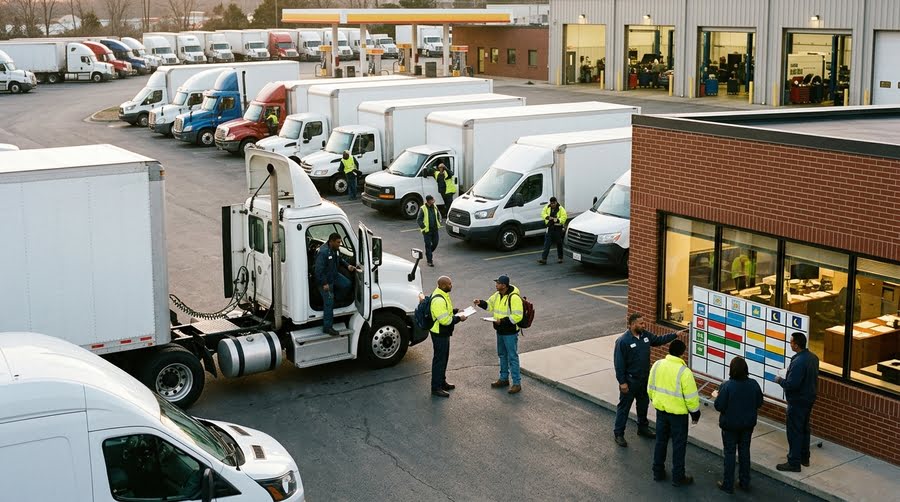
Driver substitution patterns — how frequently drivers are rotated between vehicles, routes, and shifts within an active fleet — are an often overlooked factor in long-term claims stability. Frequent reassignment may introduce behavioral variability that affects claims development independently of overall accident frequency.
In commercial transportation, driver turnover is widely tracked as the primary indicator of workforce stability. Transportation companies invest in recruiting cycles, retention programs, and driver training to manage it.
A more subtle and often underestimated factor in long-term claims stability is how frequently drivers are reassigned between vehicles, routes, shifts, and operational roles while still employed. This substitution behavior plays a meaningful role in shaping claims development — particularly when exposure is evaluated through operational consistency rather than static workforce metrics. STAR Mutual RRG offers commercial transportation programs around the operational realities of motor carriers, supporting stable, long-term coverage for fleets operating across varied conditions.
Substitution Patterns Create Behavioral Variability Within the Fleet
When drivers are frequently rotated within the operation, behavioral variability may emerge across the fleet.
Even where all drivers share equivalent qualifications and follow company procedures, individual behavioral differences exist across:
- Acceleration and braking habits
- Response to heavy traffic conditions
- Interpretation of route-specific risks
- Performance under high-stress situations
- Decision-making in time-sensitive scenarios
- Interaction with the loading and unloading environment
Each of these differences may be negligible in isolation. When substitution is frequent, however, these variations become part of the fleet’s overall operational variability.
Why a Stable Driver Headcount May Not Guarantee Operational Stability
A common assumption in commercial fleet management is that maintaining a stable driver count ensures consistent operations. In practice, a stable workforce may still generate significant behavioral variability through frequent internal rotation.
Drivers may be:
- Substituted between vehicle types
- Rotated between urban and highway routes
- Assigned alternating day and night shifts
- Cycled between high-pressure and low-pressure delivery operations
In these scenarios, headcount remains unchanged while the behavioral relationship between drivers and specific fleet elements shifts continuously.
From a liability standpoint, this distinction matters — operational behavior in practice reflects more about fleet risk than headcount alone.
How Substitution Patterns May Affect Incident Formation
Driver substitution does not create accidents directly. It does, however, reduce the opportunity for drivers to fully adapt to specific conditions, including:
- Vehicle type and handling characteristics
- Route-specific hazards and traffic patterns
- Loading and unloading area risks
- Local traffic behavior
- Pressure associated with a particular delivery cycle
Drivers operating outside their established patterns may be more likely to make minor operational errors — incidents that do not necessarily result in serious accidents but contribute to higher claims frequency over time.
Why Behavioral Continuity Matters for Claims Stability
Behavioral continuity means maintaining consistent action patterns across similar operational conditions. Substitution patterns may directly affect this consistency.
Frequent rotation may reduce behavioral repetition and make it more difficult to identify patterns or anticipate where incidents are likely to develop. Behavioral continuity is increasingly recognized as a factor in claims stability across commercial transportation operations.
The more consistent the behavior across a fleet, the more predictable the claims profile. Variability adds uncertainty even where accident frequency has not changed — and claims stability often reflects how predictable driver behavior is across the operation.
Operational Flexibility as a Source of Increased Exposure
Driver substitution offers real operational advantages. It allows transportation companies to:
- Handle increased customer demand
- Cover absent drivers efficiently
- Optimize scheduling across the workforce
- Balance workloads more evenly
- Maintain service continuity under pressure
From a business perspective these benefits are meaningful. From a liability standpoint, frequent substitution may introduce behavioral variability even where accident rates remain stable.
Managing substitution frequency — and documenting patterns when rotation is operationally necessary — may help maintain the behavioral consistency that supports stable claims development.
Visibility as a Factor in Substitution Risk
A challenge with substitution-related exposure is that it may not be monitored directly. Some transportation companies track driver schedules and availability without capturing how frequently individual drivers are rotated across different operational roles.
As a result, the exposure may not become visible until it has already begun to affect claims development. Increasing transparency around substitution patterns may help identify behavioral variability before it accumulates in the loss record.
Conclusion
Driver headcount and turnover are established metrics in fleet risk management, but substitution patterns are a meaningful factor in behavioral continuity and the consistency of operations over time.
Frequent rotation introduces variability in how individual drivers adapt to specific conditions and make operational decisions. Over time, this may contribute to greater variability in claims development — independently of whether the overall workforce remains stable.